


Most people hear “Bansko” and think of ski lifts. Fair enough: it is Bulgaria’s largest and best-known ski resort. But Bansko was a prosperous town of merchants, craftsmen, and icon painters long before the first lift went up, and it sits at the foot of Pirin, one of the most dramatic mountain ranges in the Balkans. Come for the slopes, the stone houses, the traditional food, or the hiking trails, and you’ll find there’s more here than one trip can hold.
This Bansko travel guide is the one we’d give a friend: when to come, how to get there, where to stay, and what’s truly worth your time.
Page Contents
Bansko Overview
- Where: South-west Bulgaria, at the foot of the Pirin mountains
- Altitude: about 925 m
- Population: around 13,000
- From Sofia: about 160 km, roughly 2,5 hours by car
- Highest peak above town: Vihren, 2,914 m, the second highest in Bulgaria
- Currency: euro
- Known for: skiing, Pirin National Park, its Revival-era old town, traditional winter stews, and a summer jazz festival


When to Visit Bansko
Bansko really has two seasons, and they feel like two different towns.
Winter (December to mid-April). The ski season usually runs from early December to mid-April. February is by far the busiest month. If your dates are flexible, January after New Year and March are noticeably calmer.
Summer (late June to September). This is hiking season in Pirin. Midsummer and early autumn are the best time for the high trails, and early August brings the Bansko Jazz Festival.
Spring and late autumn. Quiet in-between months with fewer people and lower prices. Some hotels and restaurants take a break, and the high mountains often hold snow into late spring.
How to Travel to Bansko
By bus from Sofia. Several companies run direct buses, and the trip takes around 3 hours. Some leave from Sofia Central Bus Station; others from Ovcha Kupel, in the southern part of the city.
By car. Located about 160 km from Sofia Airport, Bansko is an easy drive from the capital. The first half takes you along the highway towards Greece, while the final stretch winds over Predela Pass and descends into the Razlog Valley
By narrow-gauge train, the scenic way. Bansko isn’t on Bulgaria’s main rail network, but it is a stop on the Septemvri–Dobrinishte line, the only narrow-gauge railway still running in Bulgaria. The full 125 km takes about five hours, winding between the Rila, Rhodope and Pirin mountains and passing Avramovo, the highest railway station on the Balkan Peninsula at 1,267 m. You board at Septemvri, on the main Sofia–Plovdiv line. This is a scenic option to enjoy the journey along with the destination.
Where to Stay in Bansko
Bansko grew fast in the 2000s, and much of the new building went up between the old town and the ski lift.
- Stay in or near the old town if you want atmosphere: cobbled streets, stone houses, traditional taverns, and evenings that feel like a mountain town rather than a resort. The old town is where you’ll find lots of family-run guest houses.
- Stay further up, near the gondola, if you’re coming in for skiing, or if you simply want to be closer to nature. It’s about a 30-minute walk from the old town, so you’re never too far away. In peak ski season, being near the gondola also helps you beat the morning queue.
- You can also stay outside Bansko if you have your own car. You can find good accommodation in Dobrinishte, Banya, and the area, including large and premium spa hotels. This is a good option if you want to combine skiing and hot mineral pools on your doorstep, and don’t mind a short drive into town.

Bansko Winter Activities
Bansko is Bulgaria’s largest ski area: roughly 75 km of slopes between about 990 and 2,600 m. It has been named Bulgaria’s best ski resort at the World Ski Awards 13 years in a row.
- Winter Sports: If you visit between December and March, the ski slopes offer a classic winter experience. You can go skiing and snowboarding, but also hop on a snowmobile, or take a guided snow walk in the woods.
- Winter SPA: What better way to end a winter day than to indulge in a hot mineral water SPA? The options around Bansko are almost one too many!
- Wine Tasting: While not strictly a winter activity, you can enjoy a few glasses of wine and rakia at The BOTTLE Wine Bar and Cellar or on a day trip to Melnik – one of Bulgaria’s most famous wine regions.
Practical Tip: A single gondola links the town with the ski area. The ride takes about half an hour, and on peak mornings the queue can swallow the first hour of your day.
- Be at the bottom station 10–15 minutes before it opens, or come after 11:00, once the morning rush has cleared.
- If you can, avoid February.
- Taxis wait at the base station and drive skiers up the mountain road. When the queue is long, many regulars simply take one.
- Buy your lift pass before your first morning, so you’re not standing in two queues.
- If you’re learning, the nursery slopes are at the top of the gondola, away from through traffic.

Bansko Summer Activities
Pirin National Park is a UNESCO World Heritage Site, and it’s the reason we love Bansko in summer! You will find marble and granite peaks, glacial lakes, and old pine forests within half an hour of town.
Baikushev’s Pine. Bulgaria’s oldest tree, around 1,300 years old, which makes it roughly as old as the Bulgarian state itself (founded in 681). This pine is about 24 m tall and more than 7 m around, and it stands right beside the road from Bansko to the Banderitsa and Vihren huts, about 14.5 km from town.
Vihren hut and the lakes. A paved road climbs about 18 km from Bansko to Vihren hut, at around 1,950 m. Trails start right here: up to the glacial lakes, and up to Vihren Peak itself. If you want something gentler than a summit, the walk to Muratovo lake above the hut is a classic choice.
Bezbog lake. From Dobrinishte, a paved road of about 10 km takes you to Gotse Delchev hut (1,412 m), where a chairlift lifts you in about half an hour to Bezbog lake and hut, at around 2,240 m. From the lake, a loop of about 7.5 km to Popovo lake and back takes around 2.5 hours, a moderate walk with big views for modest effort. Check the chairlift’s summer hours before you go.
Rafting on the Struma. About 40–45 km from Bansko, the Struma River runs through the Kresna gorge, the best white-water stretch in Bulgaria. A trip usually takes around 3 hours in total, with a run of 10–12 km through a series of rapids, guide and equipment included. Spring (March to May) is for adrenaline, when snowmelt fills the river. June to August is calmer and good for families and first-timers.
Offroad Adventures: Just outside Bansko, forest tracks and open mountain terrain provide a perfect setting for off-road adventures on ATVs or jeeps. Marked mountain bike routes also run from Bansko into the foothills and up the mountain.
Horse Riding and Archery: With many beautiful forests and many riding bases in the region, Bansko is the perfect place to take your team for a horse riding trip. The views are panoramic, and the fresh mountain air is the perfect antidote to burnout.
Golf at Pirin Golf & Country Club. Just outside Razlog, a few kilometres from Bansko, this resort has an 18-hole, par-72 course designed by former Ryder Cup captain Ian Woosnam, plus a shorter 5-hole course, all with Pirin as the backdrop.
If you are interested in exploring more of what Bulgaria has to offer, take a look at our Guide on Why Bulgaria is Worth Visiting.

Bansko's Culinary Scene
Traditional Food and Mehanas
Bansko is famous for its mehanas, traditional stone taverns with roaring fireplaces, wooden interiors and often live Bulgarian folk music. Visiting one is an essential part of experiencing the town. There are plenty to choose from, particularly in the Old Town, but some of our recommendations include Vodenitsata, one of our favourite restaurants in Bansko, as well as Matsurev Han, Baryakova Mehana and Bai Kotse. Don’t miss trying these local specialties:
-
Kapama: Bansko’s signature winter dish. It consists of layers of rice, sauerkraut, and different types of meat, traditionally pork, chicken, and sausage, slowly cooked for hours in a sealed clay pot.
-
Banski Starets: A traditional local dry-cured pork speciality, usually served thinly sliced as a starter. It is particularly good with a glass of Bulgarian red wine.
-
Chomlek: Another classic Bansko dish, consisting of veal shank slowly cooked in a clay pot with potatoes, onions, garlic and carrots until wonderfully tender.
-
Banski Sudzhuk and Krvavitsa: Traditional local sausages and cured meat specialities, perfect for winter.
Modern Food Scene
Bansko’s food scene has evolved considerably, and alongside its traditional taverns, you’ll find some excellent bakeries, speciality coffee shops and contemporary restaurants. Here are a few places we recommend adding to your food itinerary:
-
Lubanitza: A must-visit for freshly prepared savoury and sweet pastries, and modern interpretations of traditional banitsa.
-
Lembas Bakery: Head here for excellent freshly baked, all-butter croissants, artisan sourdough bread and specialty coffee. A lovely spot for a slow breakfast.
-
Le Petit Nicolas: A French-inspired bakery and café serving croissants, homemade pastries, sandwiches and good coffee.
-
New Coffee World: Another great coffee stop, especially if you enjoy good coffee alongside freshly made gelato and pastries in the setting of Bansko’s most picturesque street.
-

- Chomlek – Bulgarian stew

-
- Lokumi sweet pastry

-
- Bulgarian Yoghurt and Honey Dessert

-
- Wine Tasting in Bansko

-
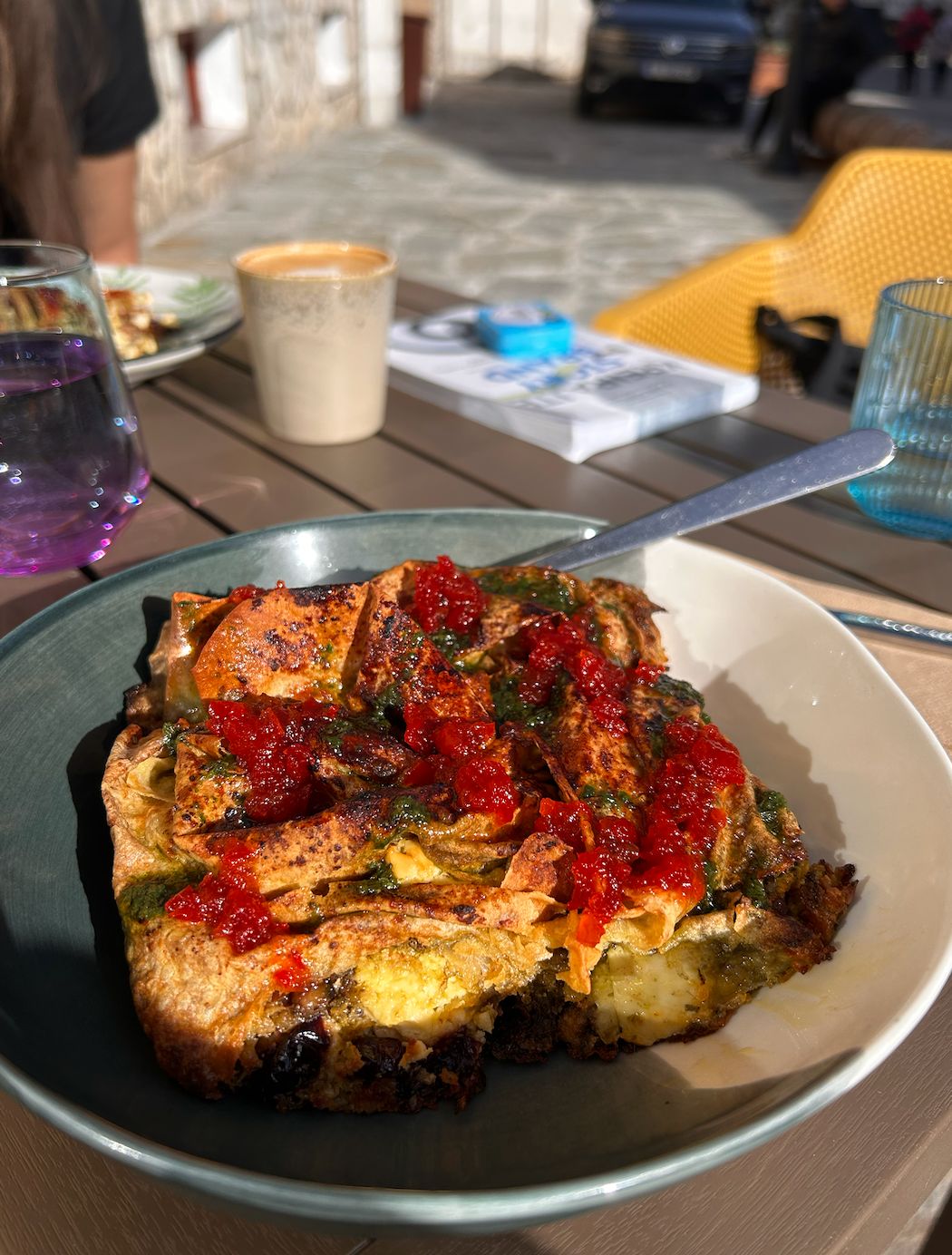
- Banitsa at Lyubanitza
-
- Milk shakes at New Coffee World

Bansko for Wellness and Corporate Retreats
Bansko is one of Bulgaria’s best destinations for wellness and corporate retreats, and even small-scale conferences. It’s about 160 km from Sofia Airport, with high mountains on one side, hot springs on the other, and a charming old town. The mix of nature, healing water, good food, and easy access is hard to find in one place.
Wellness and SPA
- Healing mineral water: The area around Bansko is abundant with mineral water. The village of Banya has more than 70 hot springs (37–57°C), while Dobrinishte has 17, and many of the large spa hotels around Bansko have their own mineral-water pools. Banya is also home to Pulse Therme, the largest mineral-water spa centre in Bulgaria, covering more than 6,000 m² and offering numerous indoor and outdoor mineral pools, saunas, steam baths and relaxation areas.
- Mountain air and gentle movement: morning walks in Pirin National Park, forest trails, and the gondola or the Bezbog chairlift to reach high lakes without a hard climb, so groups with mixed fitness can all enjoy the mountain.
- Slow food: long dinners in a mehana, with clay-pot dishes and often live traditional music.
- Space to switch off: outside the February ski peak and the August jazz festival, the valley is calm, green and quiet.
Corporate Retreats and Team Building
- Venues with everything under one roof: the large resort hotels combine meeting rooms, spa and accommodation. Kempinski Hotel Grand Arena, a minute’s walk from the gondola, has 157 rooms and conference rooms for up to about 150 guests, and was named Best MICE Hotel 2024 at the World MICE Awards. Pirin Golf & Country Club, just outside Razlog, adds golf and a large spa to the mix.
- Team activities for every season: in winter, ski or snowboard lessons for the whole group and a day on the slopes; in summer, rafting in the Kresna gorge, a hike to Bezbog lake or a round of golf; any time of year, a walk through the old town, a kapama dinner in a mehana and an evening in the hot springs.
- A good balance of work and rest: meetings in the morning, mountains in the afternoon, and a dinner together that people remember long after the trip.
. . . . .
We are Balkan Wanders, a Bulgaria-based team that knows the Balkans in depth. We curate every trip with care, combining local knowledge, trusted partners, regional highlights, and places that are still under the radar.
Planning a wellness retreat, a ski holiday, or a corporate gathering? We’re here to help!